Carney and Ford's Steel Aid Points to 73% Upside, If Execution Holds
Ottawa and Queen's Park are paying to rebuild a steel mill in Sault Ste. Marie while Washington taxes that same mill's steel at the border. One analyst still sees Algoma Steel (TSX: ASTL) rising about 73% on the back of Carney and Ford's support, and for anyone holding or watching TSX industrials, that number deserves a careful read.
The upside depends on two bets at once. One is that Algoma's new electric arc furnace comes online and ramps up on schedule. The other is that the company can sell the steel at decent prices in a market the U.S. has partly closed. Government aid helps a great deal with the first bet and much less with the second, and knowing which risk you're actually buying is the one idea worth taking into any policy-driven trade.
What government steel aid pays for, and what shareholders still carry
The policy case is real. Federal and Ontario support, including roughly $400 million in federal funding earmarked earlier for Algoma's transition, helps replace coal-fired blast furnaces with electric arc furnaces. That switch is expected to cut the mill's emissions by about 70%, which matters as carbon pricing climbs. Electric arc furnaces can also be throttled up or down with demand, while a blast furnace has to run around the clock. In a slowdown, that flexibility protects margins in a way older steelmakers never could.
Canada has added protection on the other side too, with a 25% tariff on Chinese steel imports that took effect in late 2024. When a Liberal federal government and a Conservative premier back the same industry, political risk shrinks.
What the cheque can't do is run the furnace. Large industrial conversions are known for delays and cost overruns, and 2026 is the commissioning and ramp-up window, so the engineering is being tested now. Selling the output is the other problem. As of April 6, 2026, U.S. Section 232 tariffs on Canadian steel and aluminum run from 15% to 50%, according to the federal Trade Commissioner Service. With about C$3.6 billion in goods crossing the border every day, a mill that has long shipped south can't easily replace that buyer with domestic demand alone. Taxpayers fund the build. Shareholders carry the ramp and the price of steel.
Why December could hand you a better entry price
Stocks that have lagged through the year tend to face extra selling in December, when Canadian investors book losses to offset gains. That pressure has nothing to do with whether the furnace works, and it often fades in January.
If you already hold a losing industrial position, the tax rules give you room to plan. A net capital loss can be carried back three years against gains you've already reported, which can recover tax you paid. Remember the superficial loss rule: buy the same stock back within 30 days and the loss is denied. For someone looking to buy, a December dip can be a cheaper way to pay for an unproven operating story.
Three checks before you size a position
Follow the commissioning updates. Each quarterly report should show the furnace moving from first heat to steady output. Slipped dates or rising capital costs are the early warning that the 73% path is stretching out.
Buy in stages around tax-loss season. Splitting your entry between December and early 2027 lets you see more ramp-up data before committing fully.
Cap the position, especially if it's borrowed money. If you're investing with a home equity line through a strategy like the Smith Manoeuvre™, the interest may be deductible, but leverage magnifies losses as surely as gains. A single steel turnaround, exposed to commodity prices and U.S. tariffs, belongs in a small slice of a diversified portfolio rather than at its centre.
Policy can lower the cost of building a better mill. Whether that mill earns its keep is still a bet you place yourself, so size it like one.



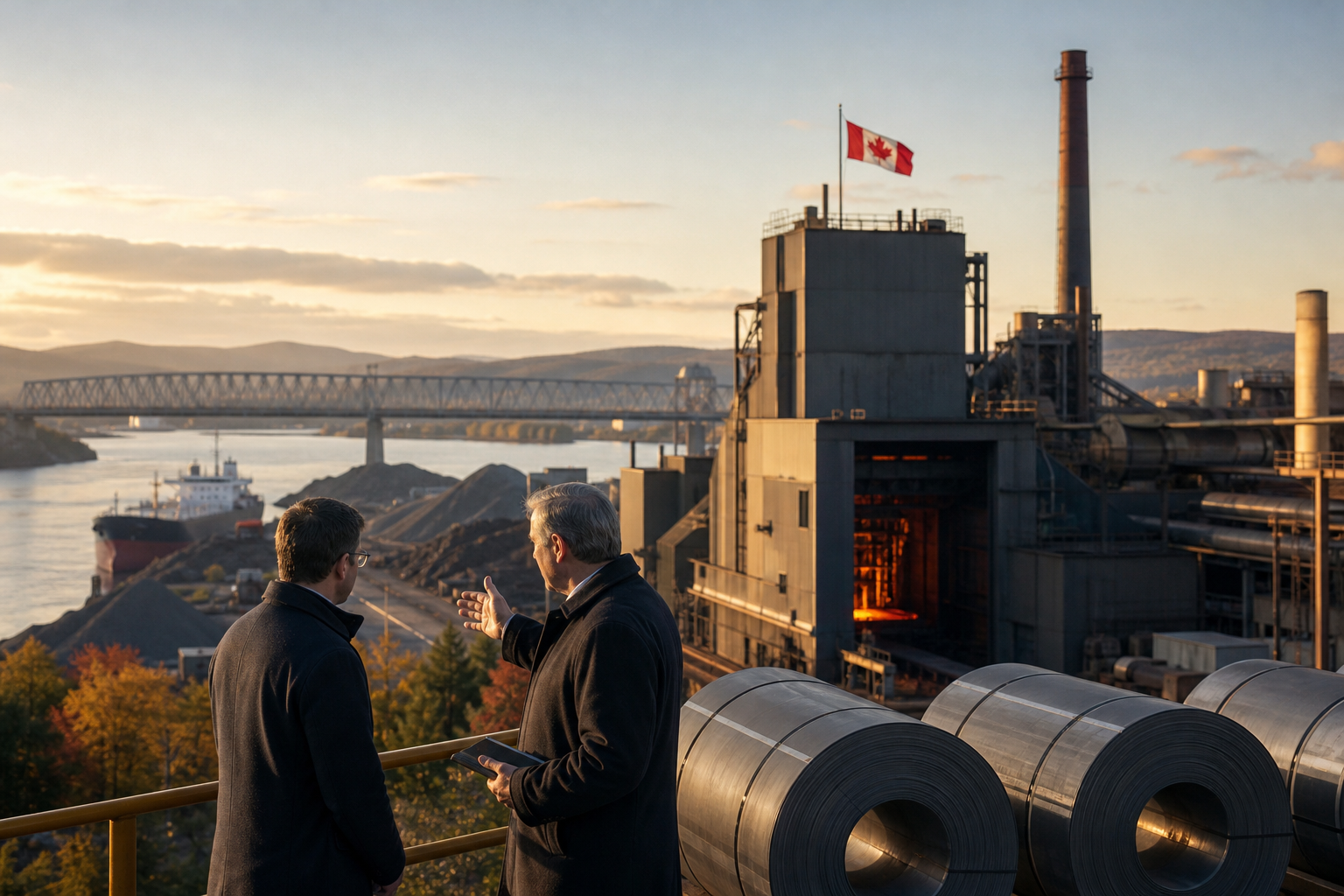

Ottawa and Queen's Park are paying to rebuild a steel mill in Sault Ste. Marie while Washington taxes that same mill's steel at the border. One analyst still sees Algoma Steel (TSX: ASTL) rising about 73% on the back of Carney and Ford's support, and for anyone holding or watching TSX industrials, that number deserves a careful read.
The upside depends on two bets at once. One is that Algoma's new electric arc furnace comes online and ramps up on schedule. The other is that the company can sell the steel at decent prices in a market the U.S. has partly closed. Government aid helps a great deal with the first bet and much less with the second, and knowing which risk you're actually buying is the one idea worth taking into any policy-driven trade.
What government steel aid pays for, and what shareholders still carry
The policy case is real. Federal and Ontario support, including roughly $400 million in federal funding earmarked earlier for Algoma's transition, helps replace coal-fired blast furnaces with electric arc furnaces. That switch is expected to cut the mill's emissions by about 70%, which matters as carbon pricing climbs. Electric arc furnaces can also be throttled up or down with demand, while a blast furnace has to run around the clock. In a slowdown, that flexibility protects margins in a way older steelmakers never could.
Canada has added protection on the other side too, with a 25% tariff on Chinese steel imports that took effect in late 2024. When a Liberal federal government and a Conservative premier back the same industry, political risk shrinks.
What the cheque can't do is run the furnace. Large industrial conversions are known for delays and cost overruns, and 2026 is the commissioning and ramp-up window, so the engineering is being tested now. Selling the output is the other problem. As of April 6, 2026, U.S. Section 232 tariffs on Canadian steel and aluminum run from 15% to 50%, according to the federal Trade Commissioner Service. With about C$3.6 billion in goods crossing the border every day, a mill that has long shipped south can't easily replace that buyer with domestic demand alone. Taxpayers fund the build. Shareholders carry the ramp and the price of steel.
Why December could hand you a better entry price
Stocks that have lagged through the year tend to face extra selling in December, when Canadian investors book losses to offset gains. That pressure has nothing to do with whether the furnace works, and it often fades in January.
If you already hold a losing industrial position, the tax rules give you room to plan. A net capital loss can be carried back three years against gains you've already reported, which can recover tax you paid. Remember the superficial loss rule: buy the same stock back within 30 days and the loss is denied. For someone looking to buy, a December dip can be a cheaper way to pay for an unproven operating story.
Three checks before you size a position
Policy can lower the cost of building a better mill. Whether that mill earns its keep is still a bet you place yourself, so size it like one.
Read Next
How the Federal 2026 Budget Could Reshape Canada’s Mortgage Market
Beyond the Rate Hike: Why Financial Strategy Matters
The Bank of Canada Raises Rates: What Does This Mean for Borrowers?
A Plan for Every Dollar of the $6,883 Child Benefit, Ages 6 to 17